Judea, central hill country · Today: Jerusalem
Jerusalem in the Bible
Also called Zion
Jerusalem enters the story as a Jebusite stronghold David captures and makes his capital, and it never leaves it. Temple, monarchy, siege, exile, return, and the death and resurrection of Jesus all happen here, and Revelation closes with a new Jerusalem coming down.
Geographic context
Jerusalem on the map
Jerusalem stands on a ridge in the Judean hill country, about 55 km inland from the Mediterranean and 25 km west of the Dead Sea. The biblical city grew from the small City of David south of the Temple Mount into the walled city whose Old City survives today.
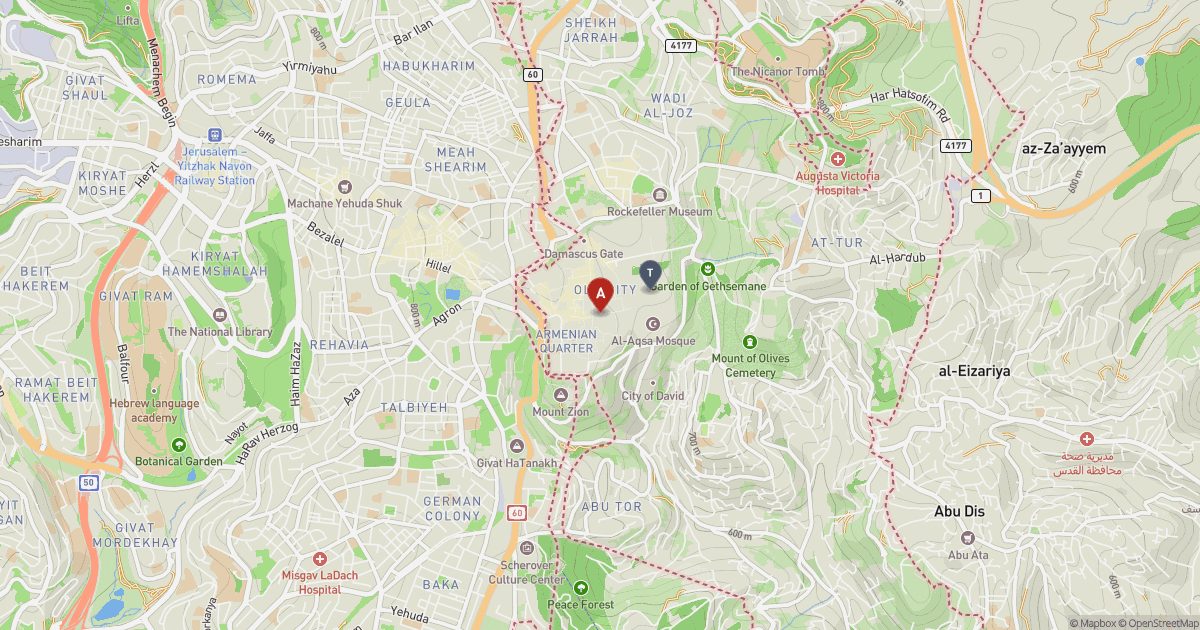
- Old City
- The walled historic centre, including the traditional sites of the Gospels' final week.
- T · Temple Mount
- The platform where Solomon's and later Herod's Temple stood.
Archaeology
The Broad Wall from Hezekiah's day, the Siloam tunnel and its inscription, the stepped stone structure in the City of David, and the Herodian street and ritual baths below the Temple Mount are all visible today. The Pilate inscription from Caesarea and the Caiaphas ossuary anchor the Gospel accounts to named officials.
Verses mentioning Jerusalem
820 occurrences across 767 verses in the King James Version.
- 2 Chronicles 12:13
So king Rehoboam strengthened himself in Jerusalem, and reigned: for Rehoboam was one and forty years old when he began to reign, and he reigned seventeen years in Jerusalem, the city which the LORD had chosen out of all the tribes of Israel, to put his name there. And his mother's name was Naamah an Ammonitess.
Read in context - 2 Chronicles 13:2
He reigned three years in Jerusalem. His mother's name also was Michaiah the daughter of Uriel of Gibeah. And there was war between Abijah and Jeroboam.
Read in context - 2 Chronicles 14:15
They smote also the tents of cattle, and carried away sheep and camels in abundance, and returned to Jerusalem.
Read in context - 2 Chronicles 15:10
So they gathered themselves together at Jerusalem in the third month, in the fifteenth year of the reign of Asa.
Read in context - 2 Chronicles 17:13
And he had much business in the cities of Judah: and the men of war, mighty men of valour, were in Jerusalem.
Read in context - 2 Chronicles 19:1
And Jehoshaphat the king of Judah returned to his house in peace to Jerusalem.
Read in context - 2 Chronicles 19:4
And Jehoshaphat dwelt at Jerusalem: and he went out again through the people from Beersheba to mount Ephraim, and brought them back unto the LORD God of their fathers. he went: Heb. he returned and went out
Read in context - 2 Chronicles 19:8
Moreover in Jerusalem did Jehoshaphat set of the Levites, and of the priests, and of the chief of the fathers of Israel, for the judgment of the LORD, and for controversies, when they returned to Jerusalem.
Read in context - 2 Chronicles 20:5
And Jehoshaphat stood in the congregation of Judah and Jerusalem, in the house of the LORD, before the new court,
Read in context - 2 Chronicles 20:15
And he said, Hearken ye, all Judah, and ye inhabitants of Jerusalem, and thou king Jehoshaphat, Thus saith the LORD unto you, Be not afraid nor dismayed by reason of this great multitude; for the battle is not yours, but God's.
Read in context - 2 Chronicles 20:17
Ye shall not need to fight in this battle: set yourselves, stand ye still, and see the salvation of the LORD with you, O Judah and Jerusalem: fear not, nor be dismayed; to morrow go out against them: for the LORD will be with you.
Read in context - 2 Chronicles 20:18
And Jehoshaphat bowed his head with his face to the ground: and all Judah and the inhabitants of Jerusalem fell before the LORD, worshipping the LORD.
Read in context - 2 Chronicles 20:20
And they rose early in the morning, and went forth into the wilderness of Tekoa: and as they went forth, Jehoshaphat stood and said, Hear me, O Judah, and ye inhabitants of Jerusalem; Believe in the LORD your God, so shall ye be established; believe his prophets, so shall ye prosper.
Read in context - 2 Chronicles 20:27
Then they returned, every man of Judah and Jerusalem, and Jehoshaphat in the forefront of them, to go again to Jerusalem with joy; for the LORD had made them to rejoice over their enemies. forefront: Heb. head
Read in context - 2 Chronicles 20:28
And they came to Jerusalem with psalteries and harps and trumpets unto the house of the LORD.
Read in context - 2 Chronicles 20:31
And Jehoshaphat reigned over Judah: he was thirty and five years old when he began to reign, and he reigned twenty and five years in Jerusalem. And his mother's name was Azubah the daughter of Shilhi.
Read in context - 2 Chronicles 21:5
Jehoram was thirty and two years old when he began to reign, and he reigned eight years in Jerusalem.
Read in context - 2 Chronicles 21:11
Moreover he made high places in the mountains of Judah, and caused the inhabitants of Jerusalem to commit fornication, and compelled Judah thereto.
Read in context - 2 Chronicles 21:13
But hast walked in the way of the kings of Israel, and hast made Judah and the inhabitants of Jerusalem to go a whoring, like to the whoredoms of the house of Ahab, and also hast slain thy brethren of thy father's house, which were better than thyself:
Read in context - 2 Chronicles 21:20
Thirty and two years old was he when he began to reign, and he reigned in Jerusalem eight years, and departed without being desired. Howbeit they buried him in the city of David, but not in the sepulchres of the kings. without: Heb. without desire
Read in context - 2 Chronicles 22:1
And the inhabitants of Jerusalem made Ahaziah his youngest son king in his stead: for the band of men that came with the Arabians to the camp had slain all the eldest. So Ahaziah the son of Jehoram king of Judah reigned.
Read in context - 2 Chronicles 22:2
Forty and two years old was Ahaziah when he began to reign, and he reigned one year in Jerusalem. His mother's name also was Athaliah the daughter of Omri.
Read in context - 2 Chronicles 23:2
And they went about in Judah, and gathered the Levites out of all the cities of Judah, and the chief of the fathers of Israel, and they came to Jerusalem.
Read in context - 2 Chronicles 24:1
Joash was seven years old when he began to reign, and he reigned forty years in Jerusalem. His mother's name also was Zibiah of Beersheba.
Read in context - 2 Chronicles 24:6
And the king called for Jehoiada the chief, and said unto him, Why hast thou not required of the Levites to bring in out of Judah and out of Jerusalem the collection, according to the commandment of Moses the servant of the LORD, and of the congregation of Israel, for the tabernacle of witness?
Read in context