

Samaria
Today: Sebastia, West Bank
The story of Samaria
Samaria is the capital Omri builds and Ahab adorns, and the target of prophetic anger over ivory houses and injustice. After the Assyrian conquest, the mixed population of the region becomes the Samaritans of the Gospels.
“For the saying which he cried by the word of the LORD against the altar in Bethel, and against all the houses of the high places which are in the cities of Samaria, shall surely come to pass.”
Samaria on the map
The city of Samaria stood on a hill at today's Sebastia, about 10 km northwest of Nablus in the West Bank. Its name also came to mean the whole central region between Judea and Galilee — the land Jesus crossed in John 4.
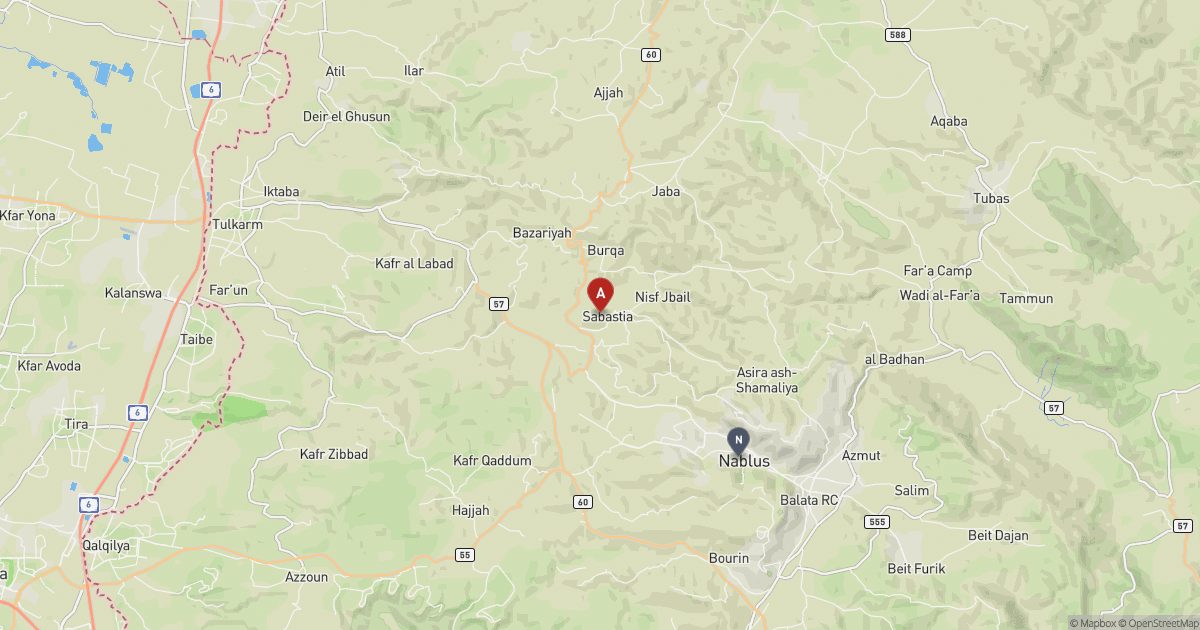
- City of Samaria
- Capital built by Omri; its ruins lie at Sebastia.
- Region of Samaria
- The hill country between Judea and Galilee, home of the Samaritans in the Gospels.
Timeline
Journeys
Verses mentioning Samaria
125 occurrences across 115 verses in the King James Version.
- For the saying which he cried by the word of the LORD against the altar in Bethel, and against all the houses of the high places which are in the cities of Samaria, shall surely come to pass.
- And he bought the hill Samaria of Shemer for two talents of silver, and built on the hill, and called the name of the city which he built, after the name of Shemer, owner of the hill, Samaria. Samaria: Heb. Shomeron
- So Omri slept with his fathers, and was buried in Samaria: and Ahab his son reigned in his stead.
- And in the thirty and eighth year of Asa king of Judah began Ahab the son of Omri to reign over Israel: and Ahab the son of Omri reigned over Israel in Samaria twenty and two years.
- And he reared up an altar for Baal in the house of Baal, which he had built in Samaria.
Where it appears
Archaeology
The acropolis has yielded hundreds of carved ivory fragments and a group of administrative ostraca recording shipments of oil and wine — the 'houses of ivory' Amos names.